What they are
Dibenzo-α-pyrones (DBPs) are a small family of aromatic molecules that occur in shilajit alongside fulvic acid — for decades treated as passengers on the mineral-carrier's ride, more recently recognized as active participants in what shilajit does. Chemically, they belong to a class of oxygen-heterocycles: a six-membered α-pyrone ring (a lactone — one carbonyl and one oxygen embedded in the ring) fused to one or more benzene rings.
The name reads like a spec sheet, and it is: di-benzo-alpha-pyrones = “two benzene rings around an α-pyrone.” Structural relatives include urolithins (microbial metabolites of dietary ellagitannins) and coumarins — both of which have been extensively studied for redox and mitochondrial effects. DBPs are their older cousin.
What they do
DBPs are hypothesized to act as electron shuttles in mitochondria. Their conjugated aromatic backbone allows them to accept and donate electrons — cycling between quinone and hydroquinone forms — a principle familiar from endogenous coenzyme Q10, though at different scale and location. In preclinical work they have been reported to:
· Support mitochondrial respiration. Cell-culture and animal studies show DBP fractions improving markers of mitochondrial function under stress conditions.
· Buffer oxidative stress. Via glutathione-recycling pathways and direct radical scavenging in vitro.
· Cross the blood-brain barrier. Some DBPs have been detected in CNS tissue in animal studies — of interest for the shilajit-and-cognition literature.
At the delivery layer, DBPs travel with fulvic acid and benefit from the same chelation-plus-membrane-transport logic that ferries fulvic across cell walls. They are not the payload; they are the payload's chemical relatives sharing the ride.
At a glance
What the literature shows
The DBP literature is thinner than the fulvic-acid literature but growing. Three foundational works — chemistry, preclinical mechanism, and a proposed CNS role — anchor the current picture. Each links to the full review in The Archive.
Where you'll find them
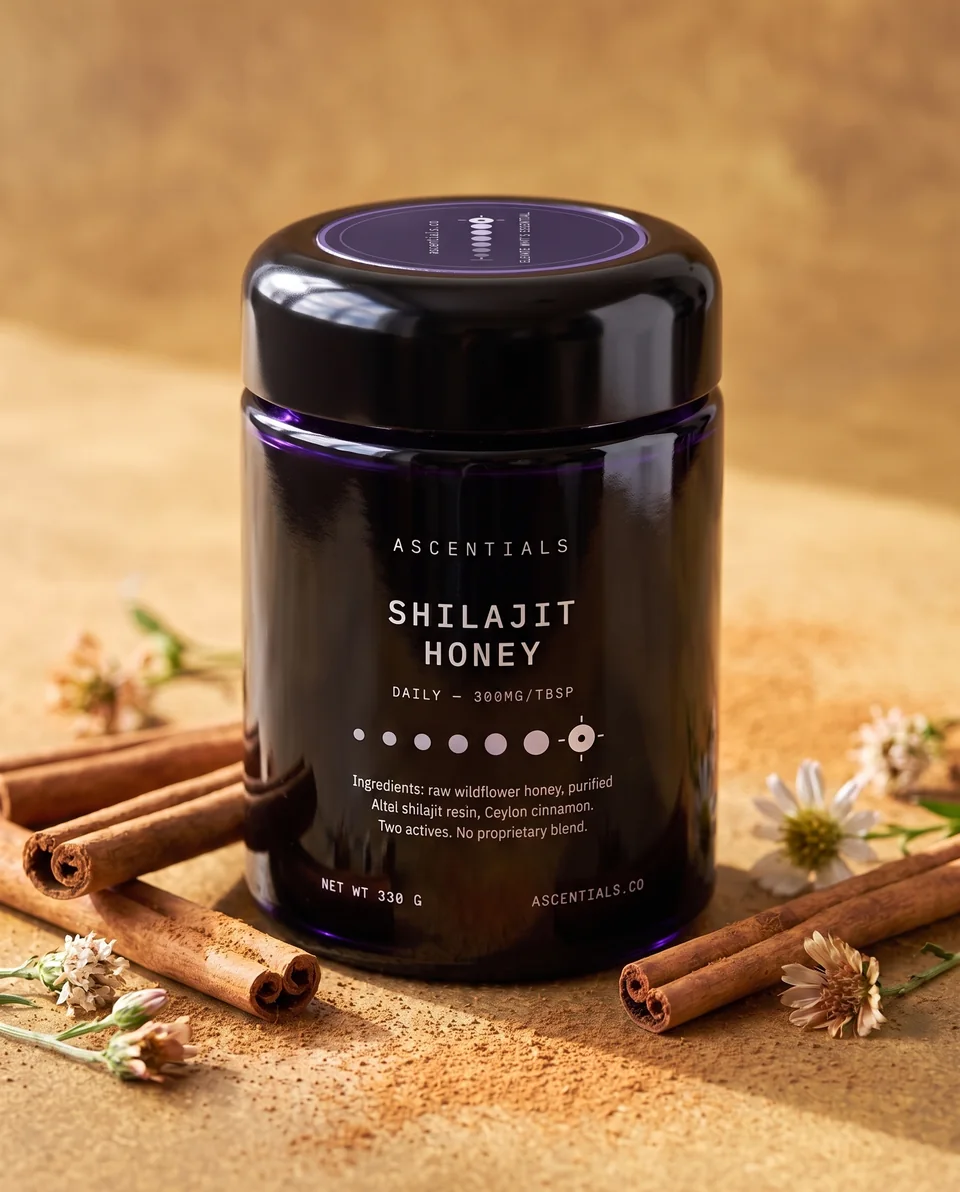
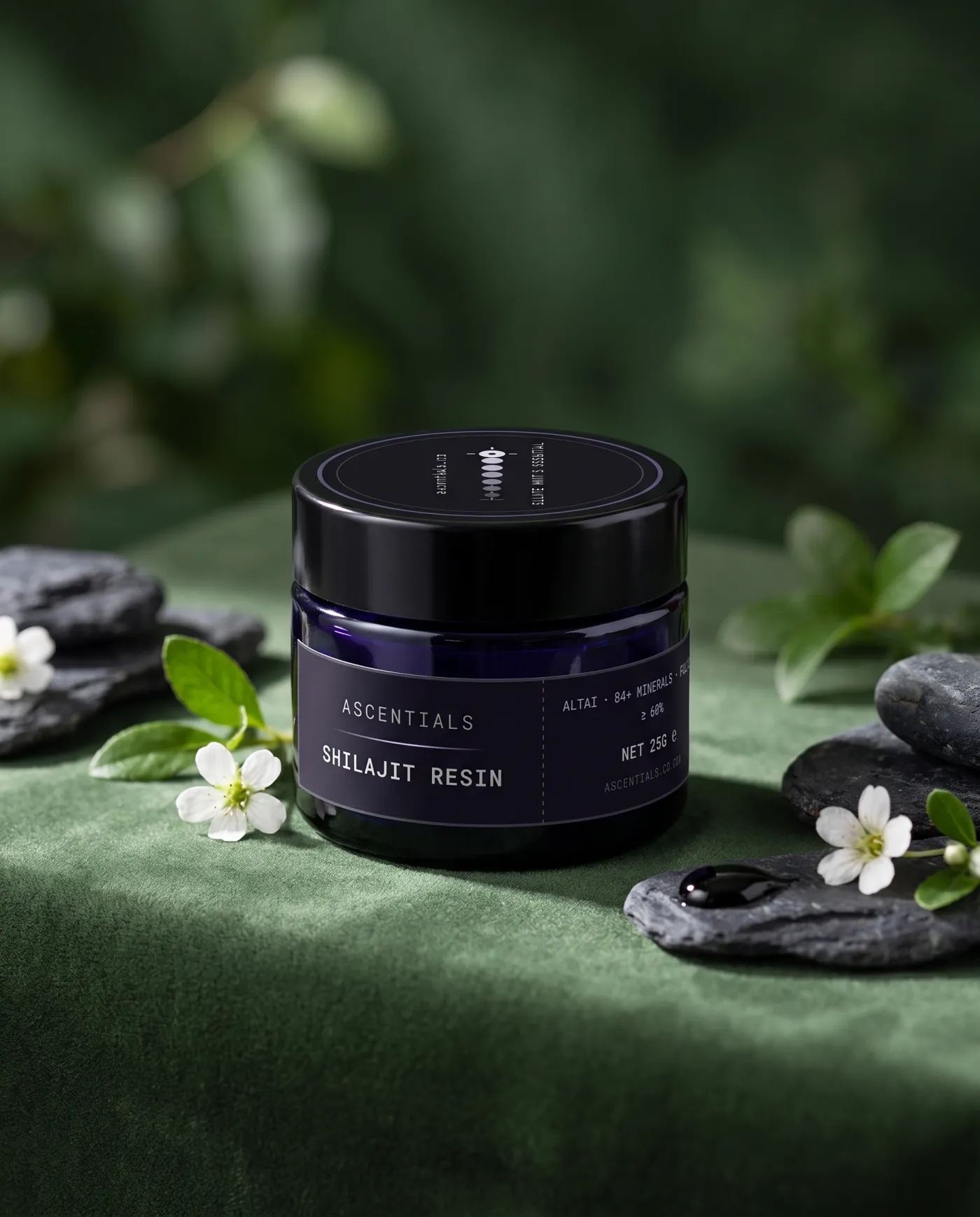
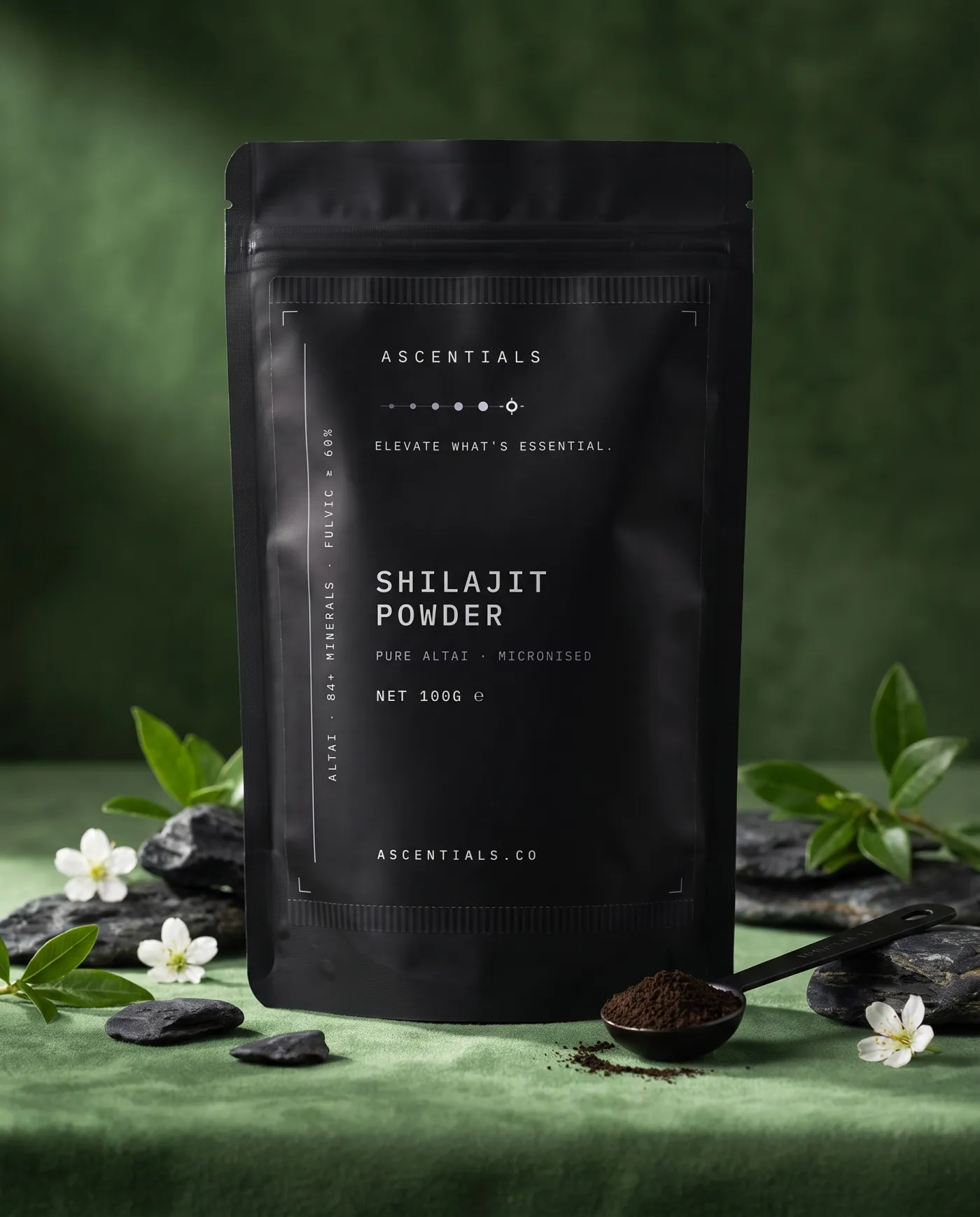
Dibenzo-α-pyrones are not added as a separate ingredient — they are present in every ASCENTIALS formula that includes purified Altai shilajit, travelling with the fulvic fraction as a natural constituent of the resin.