Shilajit Science
A resinous exudate that seeps from high-mountain rock, formed over centuries into a matrix of humic substances, dibenzo-α-pyrones, and 60+ trace minerals. Below is what the research actually explores — framed at the structure-function level, with the human evidence stated honestly, and every claim tied to a PubMed citation.
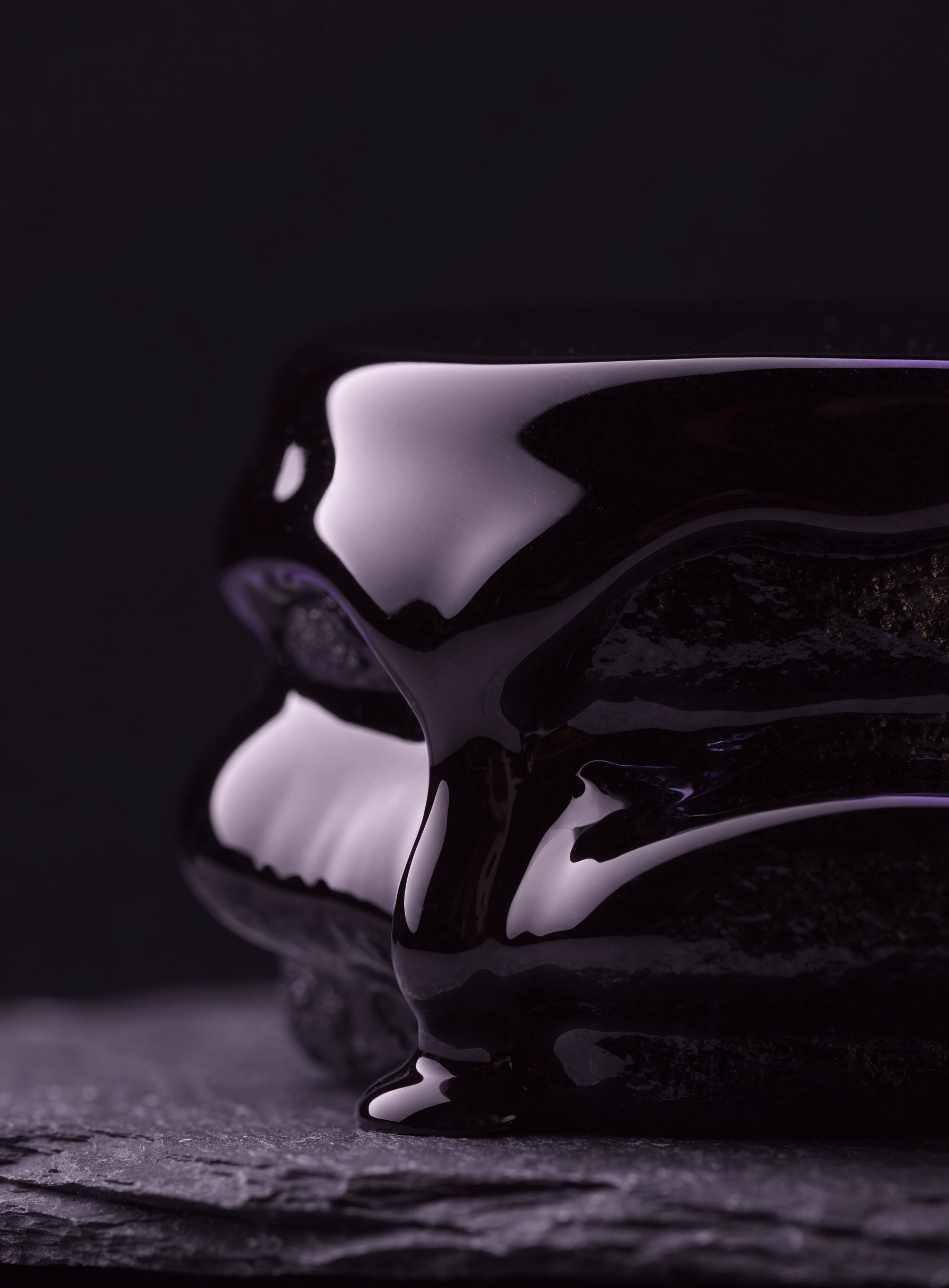
What Shilajit Actually Is
- Fulvic acidcarrier
- Dibenzo-α-pyronessignature
- Humic acidsubstrate
- Trace mineralscofactors
We’d rather tell you than overpromise. Shilajit has a long traditional record and a growing body of modern research — but much of it is still preliminary. What we can stand behind completely: where ours comes from, and how clean it is.
A Mountain Exudate
Shilajit is a resinous exudate that seeps from rock layers in high mountain ranges, formed over centuries into a complex mixture of humic substances and plant- and microbial-derived compounds. It has been used as a rejuvenator and adaptogen across traditional systems of medicine for thousands of years Agarwal 2007 · Wilson 2011.
The Active Fraction
The compounds widely identified as responsible for its activity are fulvic acid and dibenzo-α-pyrones, alongside a matrix of trace minerals held in a bioavailable, humic-substance form Stohs 2013. Purified material — free of the raw rock, heavy metals, and microbial load of unrefined shilajit — is the only grade ASCENTIALS uses.
Four Compounds, Four Mechanism Stories
Fulvic Acid — The Carrier
A low-molecular-weight humic substance. Discussed in the literature as a potential electron-shuttle and mineral-transport molecule — small enough to cross cellular membranes, with a chemistry that can pick up and release minerals. The proposed role is as the “carrier” within the matrix Ghosal 1990 · Stohs 2013 · Agarwal 2007.
Dibenzo-α-pyrones — The Signature
The compound class most strongly associated with shilajit’s mitochondrial story in the preclinical literature. Structurally adjacent to CoQ10 (also a quinone), and discussed as a potential ubiquinone-axis modulator in cell-model work — though human clinical data on the mechanism is still maturing Bhaumik 1993 · Stohs 2013.
Humic Acid — The Substrate
A higher-molecular-weight humic substance. It doesn’t cross membranes the way fulvic acid does, but it holds the trace-mineral matrix in a bioavailable form — the substrate that fulvic acid works from review literature.
Trace Minerals — The Cofactors
60+ elements at trace concentrations. The major minerals by mass — potassium, calcium, sodium, sulfur, magnesium — are essential cofactors in dozens of enzymatic processes; the trace elements (zinc, selenium, copper, manganese, iron) are cofactors in cellular energy chemistry and antioxidant defense USP <730> mineral profile.
Cellular Energy — Where Chemistry Meets the Mitochondria
The Proposed Mechanism. The shilajit–mitochondria conversation is one of the most-studied parts of the preclinical literature. The proposed mechanism: dibenzo-α-pyrones, structurally adjacent to CoQ10, may interact with the electron-transport chain inside the mitochondria — the chemistry the cell uses to make energy. The chain is a series of electron handoffs; molecules that pick up and release electrons cleanly are sometimes called “shuttles.”
What the Literature Supports Today
Shilajit is described in review articles as associated with mitochondrial function in animal models of fatigue Surapaneni 2012, and is discussed as having antioxidant and energy-supporting activity in the preclinical and traditional-use literature Stohs 2013 · Agarwal 2007.
What It Has Not Yet Shown
That shilajit acts as a CoQ10 equivalent or substitute in humans has not been established by a human RCT. The honest framing: the chemistry is suggestive and the mechanism is plausible; the human evidence is still maturing. Shilajit and CoQ10 are different molecules on a related axis — some users stack both.
The Research — What the Research Explores
Energy & Resilience. A review describes shilajit’s traditional use as a “revitalizer,” associated with enhanced physical performance, reduced fatigue, and increased ATP production; antioxidant, anti-inflammatory, adaptogenic. In an animal model of chronic fatigue, it was linked to HPA-axis modulation and preservation of mitochondrial function Stohs 2013 · Surapaneni 2012 (animal).
Male Vitality
In a randomized, double-blind, placebo-controlled trial, healthy men aged 45–55 taking purified shilajit (250 mg twice daily for 90 days) showed significant increases in total testosterone, free testosterone, and DHEAS versus placebo, while LH and FSH stayed in range. Scoped to men 45–55 at that dose Pandit 2016.
Antioxidant & Adaptogenic
Multiple reviews attribute antioxidant and adaptogenic properties to shilajit, tied to its fulvic acid and dibenzo-α-pyrone content. Animal-model work on memory, anxiety, and neurochemistry has explored these compounds in additional contexts Stohs 2013 · Agarwal 2007 · Jaiswal 1992 (animal) · Schliebs 1997 (animal).
What the Research Has Not Shown
Claims We Do Not Make
The most important thing a credible shilajit page can do is name what the evidence doesn’t yet support. Several claims that circulate across the wider category are not — or not yet — backed by the citations we hold to:
- “Boosts” testosterone broadly. The Pandit 2016 result is scoped to men 45–55 at a specific dose; it doesn’t generalize to all users.
- Increases ATP “directly.” Review literature associates shilajit with ATP and mitochondrial function; a direct human-clinical-endpoint study is not yet in the canonical references.
- “Cures” or “treats” a medical condition. Shilajit is a structure-function supplement, not a therapeutic agent.
- Cognition / memory in humans. Animal and cell-model work is active (Jaiswal 1992, Schliebs 1997); a robust human RCT for cognition is not yet the citation we hold to.
- Neuroprotection / TBI & blood-sugar regulation. Animal models exist (Khaksari 2013, Indu 2006); human clinical evidence is preliminary.
Source database: PubMed. All claims kept structure-function; the testosterone study is on men 45–55 at a specific dose — not generalized in headline copy. Animal studies are cited for mechanism context, not human outcome claims.
in the matrix
potency assayed
source
evaluation window
Where the rigor shows
New to shilajit? Start here. Quality varies enormously from one jar to the next, and most of the category quietly hides the details that separate a real product from a marketed one. Below is a five-second way to read any label — not just ours. Each row is a question worth asking before you buy; the terms are explained underneath.
| What to check | ASCENTIALS | Typical Aisle | Raw / Unrefined |
|---|---|---|---|
| Fulvic acid content | Assayed, ≥60% | Rarely stated | Unknown |
| Heavy-metal screen | Every lot, CoA | Sometimes | Not screened |
| Source & altitude | Altai, high-altitude | Vague “Himalayan” | Unspecified |
| Form | Purified resin | Powder / blends | Raw rock pitch |
| Added absorption enhancer | None | Often included | None |
| How claims are framed | Structure-function, cited | Cure claims | Folk claims |
| Effect window | 90 days, stated | “Instant” | Unspecified |
Fulvic acid — the small, low-molecular-weight carrier molecule most associated with shilajit’s activity; the one number worth standardizing and publishing. Certificate of Analysis (CoA) — the third-party lab report showing that specific batch’s fulvic content and heavy-metal screen. Dibenzo-α-pyrones — the compound class tied to shilajit’s mitochondrial story in the research. If a seller can’t show you these, you’re buying on faith.
Common questions
Purified Altai shilajit in its traditional resin form — dense, mineral-rich, and slow-dissolving. The most concentrated way to take the foundation ingredient, dosed by the rice-grain and taken in warm (never boiling) water or beneath the tongue. Pure resin firms in cold conditions and softens with warmth — the unprocessed character.
The same purified resin, gently dehydrated into a free-flowing powder. Easier to measure, faster to dissolve (5–10 seconds versus 30–60 for resin), and cleaner to stack into a smoothie or shake. Same source, same fulvic-acid spec — the difference is the format, not the material.
Morning, on an empty stomach; warm liquid, never boiling; wood, ceramic, or glass, never metal. Days 1–5 start small (lentil-size, ~150 mg); day 5+ move to pea-size (~300–500 mg) once daily. Shilajit works cumulatively, not acutely — the first noticeable shift usually lands in weeks 2–4, with the full arc over 90 days.
Where ours comes from, and how clean it is, are the two things we can stand behind completely. Every batch is tested by an independent lab: heavy-metal panel, microbial load, and fulvic-acid potency — results published in full. Purified grade only; never raw, unrefined rock material.
Sealed in Miron biophotonic violet glass, which filters visible light while admitting UV-A and infrared — preserving the bioactive matrix the way the mountain kept it. Preservation is a pillar, and the vessel is its proof.
Experience Shilajit
Purified Altai resin and powder, third-party verified and sealed in Miron glass. The mineral foundation beneath every ASCENTIALS formulation.