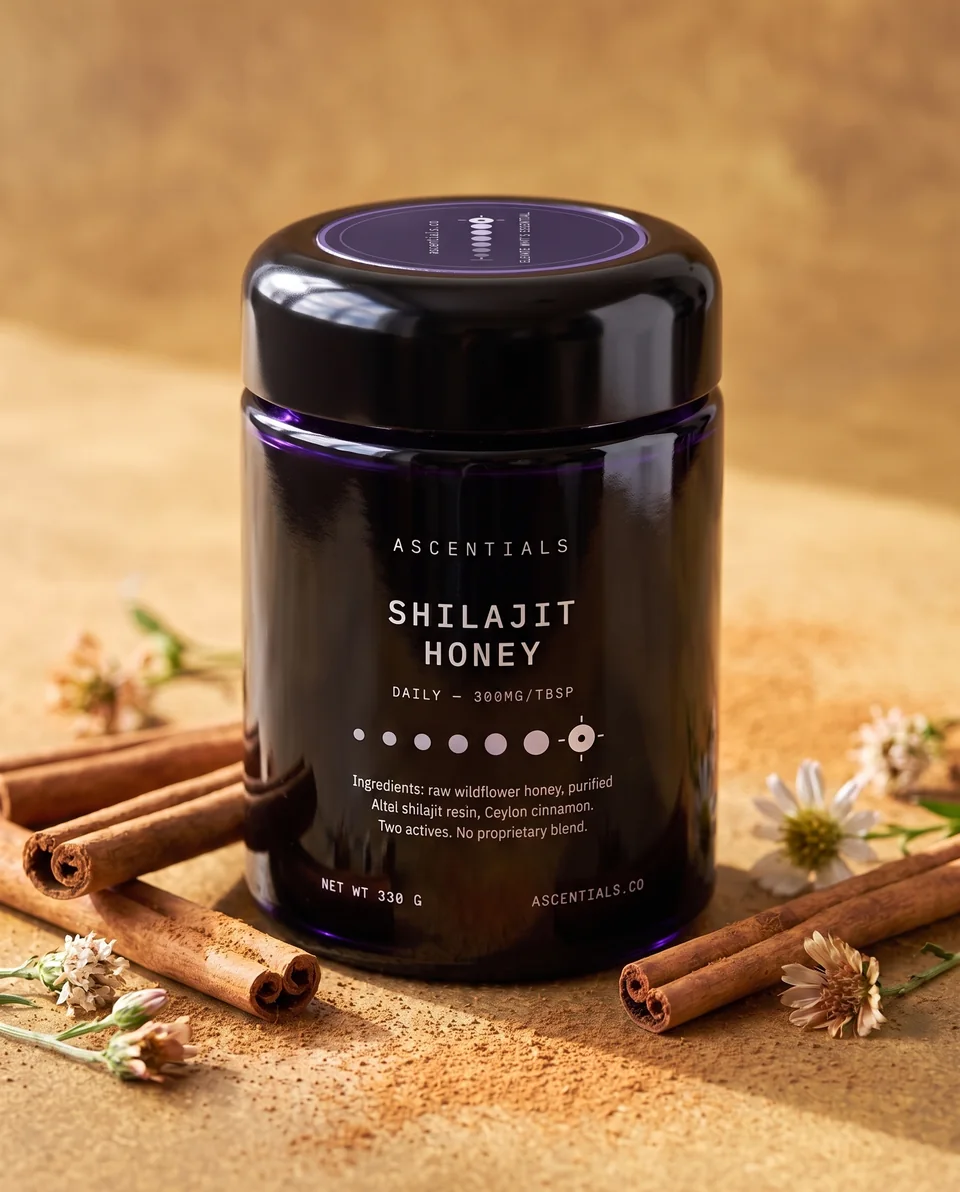
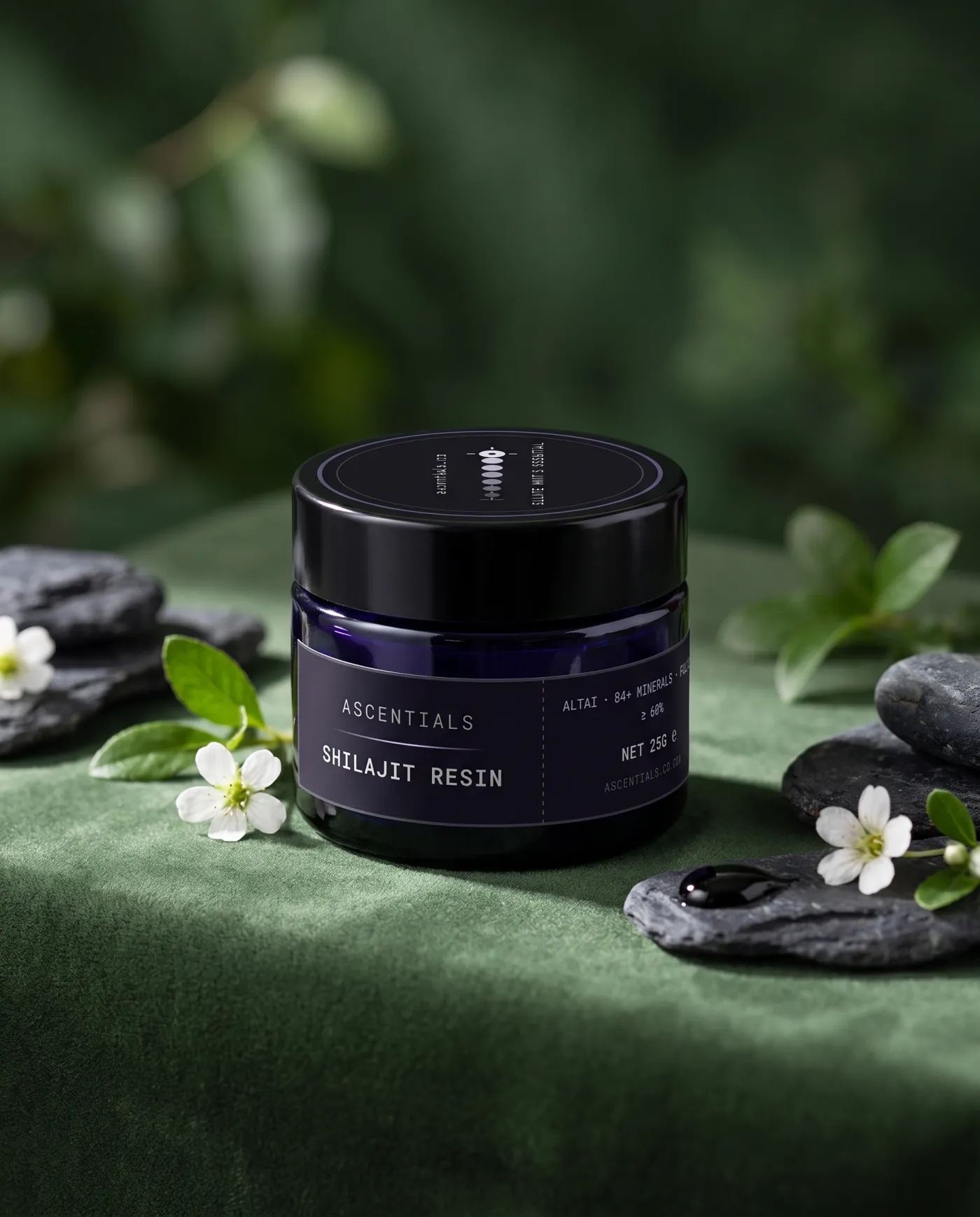
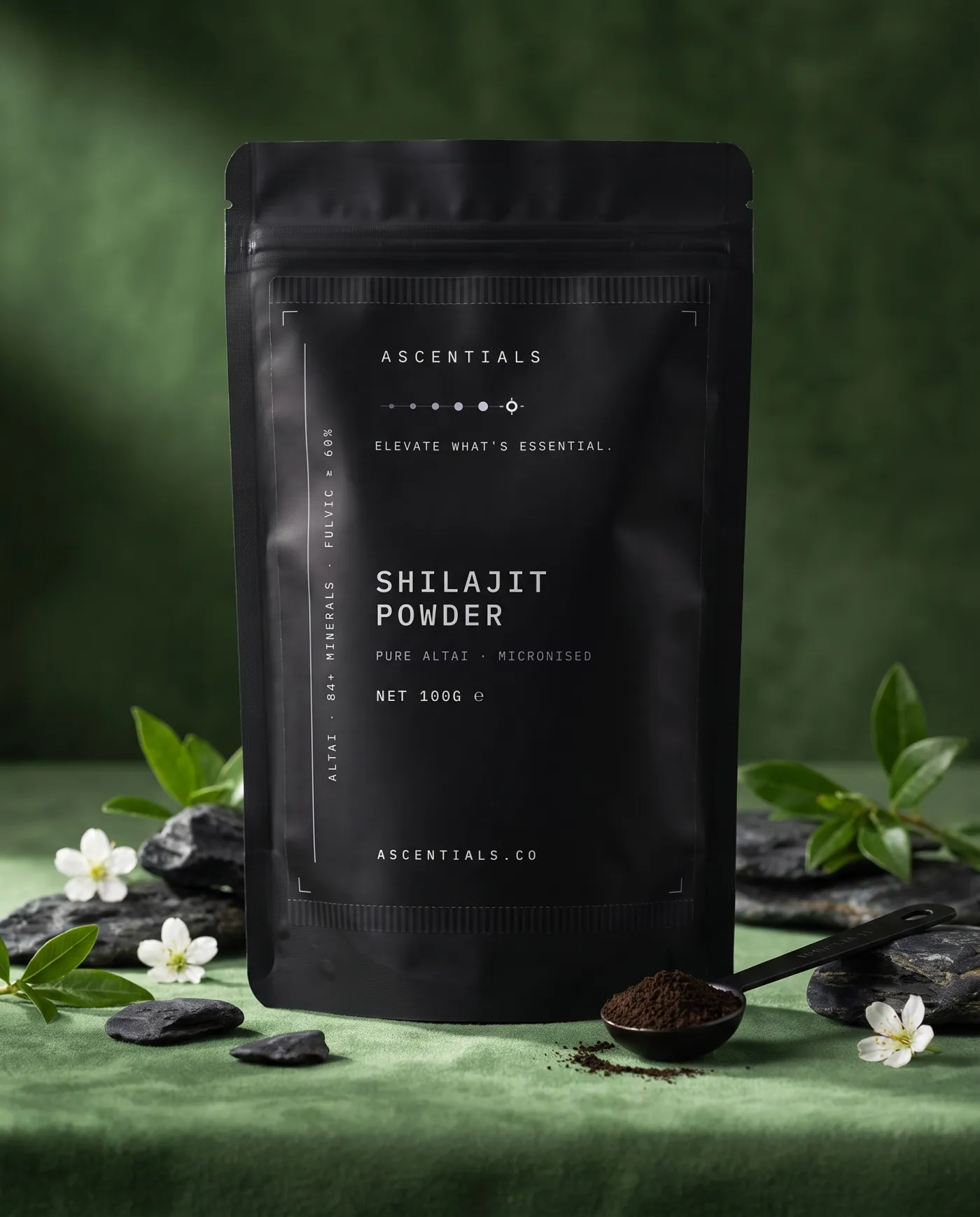
What it is
Fulvic acid is one of three humic substances — alongside humic acid and humin — formed over centuries as plant matter breaks down under microbial action. Of the three, fulvic acid has the lowest molecular weight and the highest oxygen content, which is precisely why it is biologically interesting: it is small enough to cross cell membranes and reactive enough to carry other molecules with it.
In shilajit, fulvic acid is not an additive — it is the defining constituent. A resin's quality is measured by its standardized fulvic percentage, not by the length of its mineral list.
How it works
Three properties do the work. First, chelation — fulvic acid binds mineral ions into small, absorbable complexes, a process related to chelation. Second, membrane transport — its low molecular weight lets it shuttle those complexes across the intestinal wall and into cells. Third, redox activity — fulvic acid both donates and accepts electrons, which is thought to support mitochondrial electron transport and buffer oxidative stress.
The related dibenzo-α-pyrones travel with it and are studied for a complementary role in cellular energy transfer.
At a glance
What the literature shows
A condensed view. Each line links to the full review in The Archive, where the complete methods, limitations, and citations live.