

What it is
Chelation is the binding of a metal ion by an organic molecule into a stable, ring-shaped complex. The word comes from the Greek χηλή (khēlē), “claw” — a hint at the geometry: the ligand's donor atoms wrap around the ion from multiple sides, gripping it far more securely than any single bond could.
Not all metal binding is chelation. A monodentate binder attaches at one point and lets go easily; a chelator attaches at two, three, four or more points and holds. That geometry is the difference between a passing acquaintance and a chemical embrace — and it is the difference between a mineral that passes through and a mineral that is absorbed.
How it works
Chelation depends on three properties of the ligand. First, donor atoms — oxygen, nitrogen, and sulfur carry the lone electron pairs that reach out to the metal. Second, denticity — the number of binding sites the ligand presents at once (bidentate, tridentate, hexadentate). Third, geometry — whether those sites can actually reach the ion simultaneously.
Ring size matters. Five- and six-membered chelate rings are the most stable — small enough to hold the ion firmly, large enough to close without strain. Stability is measured by the log K formation constant: a bidentate chelate can be roughly 10⁶ times more stable than the same metal bound at a single site by an identical ligand type. That is the chelate effect.
Two consequences follow. For nutrition, chelated trace minerals — magnesium bisglycinate, iron bisglycinate, zinc picolinate — present the ion as a small organic molecule rather than as a bare charge, changing which intestinal transporters admit it and how much is absorbed. For toxicology, chelation of unwanted heavy metals — lead, mercury, cadmium — produces a stable, water-soluble complex the kidneys can excrete. This is the mechanism behind the pharmaceutical chelators DMSA, EDTA, and DMPS.
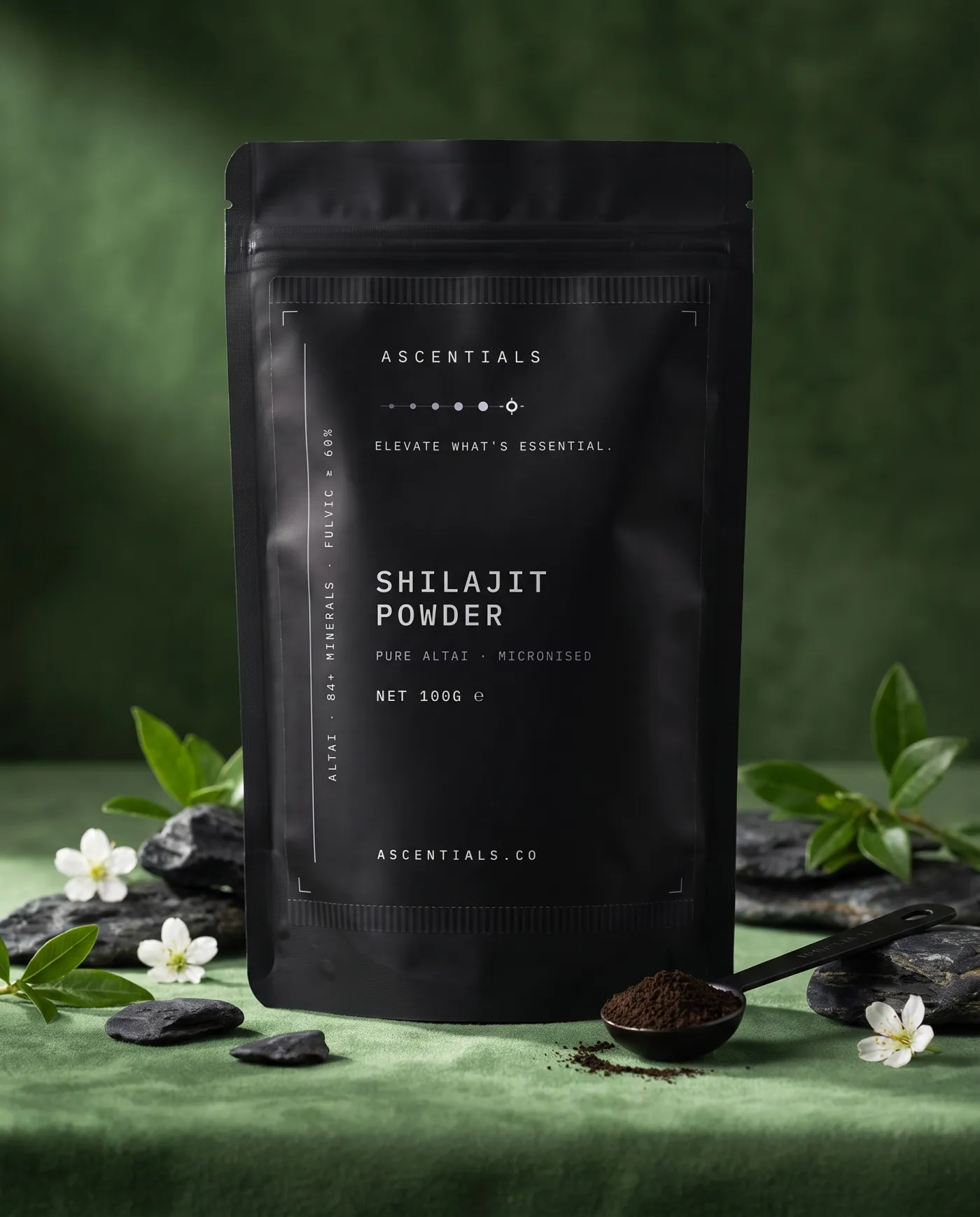
The fulvic acid in shilajit does both jobs at low affinity — strong enough to shuttle useful minerals in, and, in preclinical work, strong enough to sequester some unwanted metals out.
At a glance
What the literature shows
Chelation is one of the better-mapped topics in this compendium — it sits inside coordination chemistry (a mature field), pharmaceutical detoxification practice, and nutritional bioavailability research. A condensed view; each line links to the full record in The Archive.
Where it's at work
Chelation is not a claim we make on packaging — it is a mechanism operating quietly inside three of our formulas. Two use natural chelation (fulvic acid's low-affinity binding); one uses deliberate chelation (mineral fractions chosen in chelated form for absorption).