

↳ You followed a term. This is the full Codex entry behind the hover gloss for “adaptogen.”
The Codex  /  Terms  /  Adaptogen
Term · Pharmacology

Adaptogen

/əˈdæptədʒən/ · a pharmacological category · coined 1947

A class of botanical modulators that help the body's stress-response return to balance — non-specific in target, defined by a normalizing action and low toxicity in ordinary use.

01 · Definition

What it is

Adaptogen is a pharmacological category, not a single plant. The term was coined by the Soviet toxicologist Nikolai Lazarev in 1947 and formalized by Brekhman and Dardymov in 1969 around three criteria: a substance must raise non-specific resistance to stress, exert a normalizing effect regardless of the direction of the stressor, and be innocuous in ordinary use.

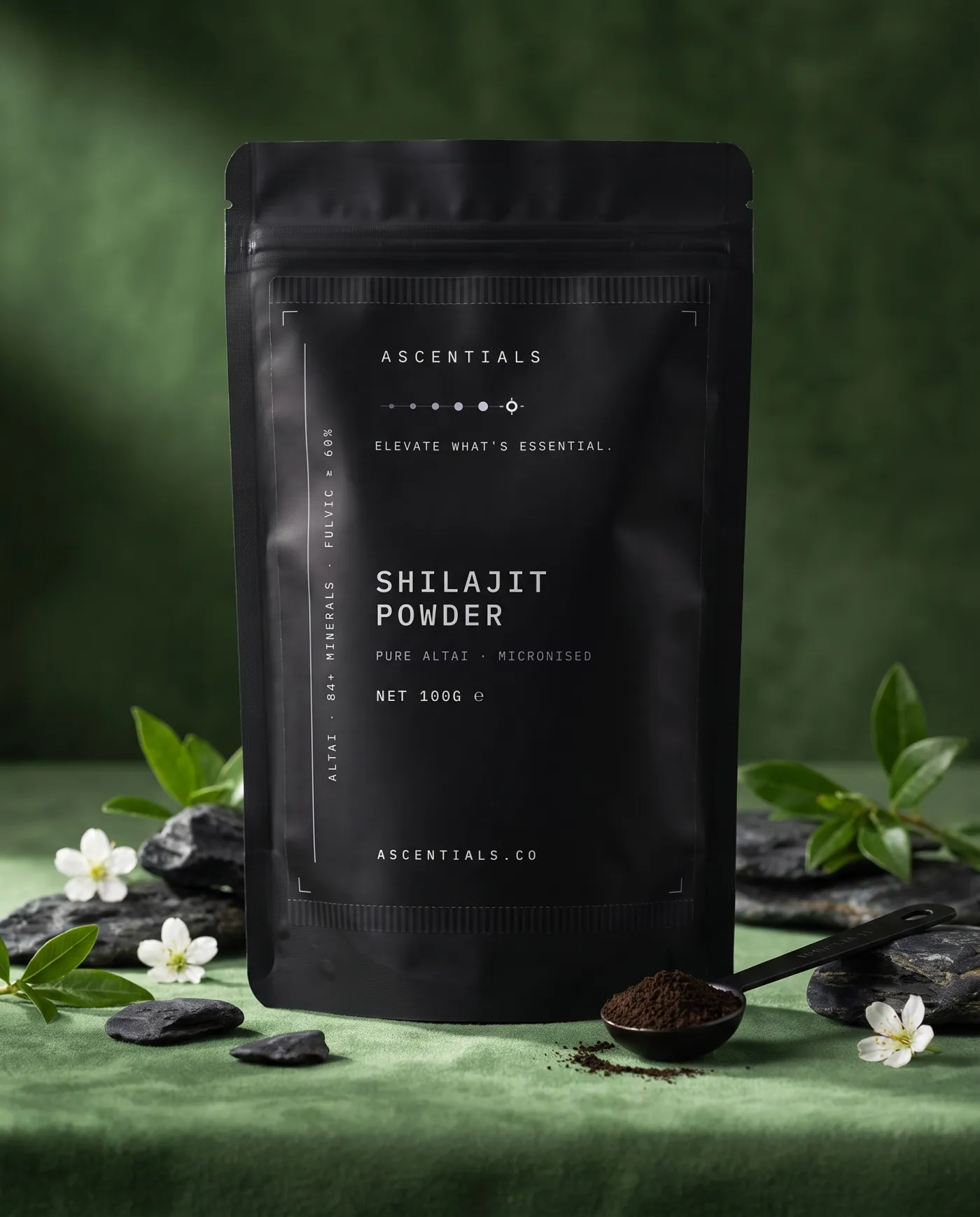
It is a functional definition — what the substance does to the stress-response — rather than a botanical family. Shilajit is described in the review literature as having adaptogenic activity in exactly this sense.

02 · Mechanism

How it works

Adaptogens are understood to act on the body's stress axis — the hypothalamic–pituitary–adrenal (HPA) system — and on molecular stress mediators such as heat-shock proteins and cortisol signalling, nudging an over- or under-active response back toward homeostasis.

Because the category is defined by effect rather than by a shared molecule, the evidence lives at the level of individual adaptogens; the strongest controlled data are for specific botanicals rather than for the class as a whole.

03 · Key facts

At a glance

1947Term coined
3Defining criteria
HPAPrimary axis
LowToxicity profile
04 · References

What the literature shows

A condensed view. The class is defined pharmacologically; controlled evidence is strongest for specific adaptogens.

01
Panossian A, Wikman G · Pharmaceuticals · 2010 Review
Reviews CNS effects and molecular stress-protective mechanisms of adaptogens; strongest clinical evidence for specific extracts.
Archive →
02
Stohs SJ · Phytother Res · 2014 Review
Places shilajit's activity within the adaptogenic, antioxidant and anti-inflammatory frame.
Archive →
05 · Where it appears

Where you'll find it

07 · Related reading

Go deeper

These statements have not been evaluated by the Food and Drug Administration. This product is not intended to diagnose, treat, cure, or prevent any disease. Codex entries describe structure-function mechanisms and cite published literature; they are informational and not medical advice. Effect timelines are stated honestly — many are gradual.

Entry CDX·016 Category Ingredient Reviewed Jul 2026 The Codex · ASCENTIALS