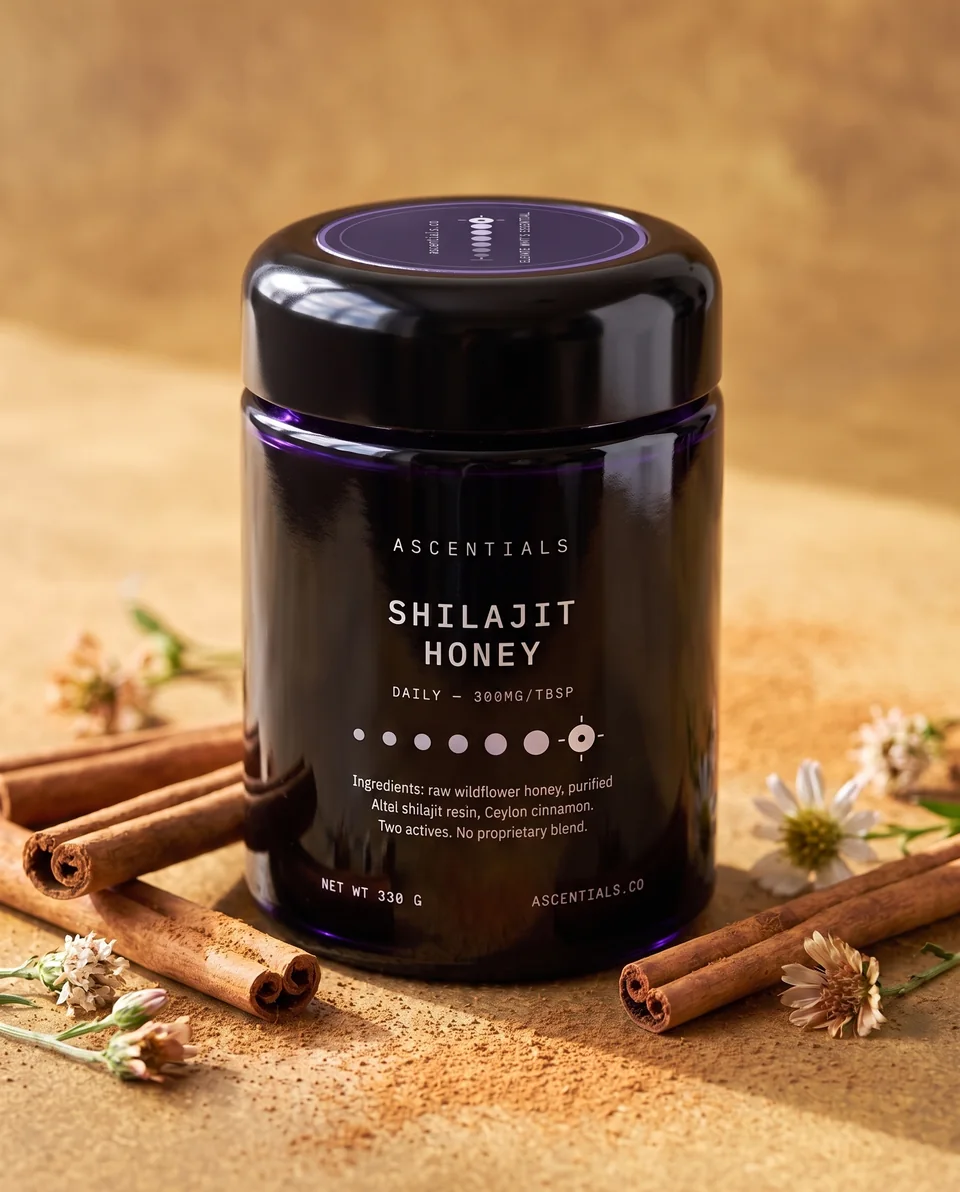
↳ You followed a term. This is the full Codex entry behind the hover gloss for “mi zhi.”
The Codex  /  Terms  /  Mi zhi
Term · Chinese materia medica

Mi zhi

蜜炙 · “honey-fried herbs” · TCM

“Honey-fried herbs” — a preparation method standard across the Chinese materia medica, where honey binds and potentiates the botanical.

01 · Definition

What it is

Mi zhi (蜜炙) is a processing method — one of the classical zhi techniques — in which a herb is stir-fried with honey. The honey is an adjuvant: it moderates harshness, adds a tonifying quality, and acts as a vehicle. It is the Eastern parallel to the Ayurvedic anupana.

02 · Context

What it does

The tradition treats the carrier as a technology. Honey's stickiness, low water activity and mild sweetness are used deliberately — to bind the botanical, temper its action, and carry it. Two traditions, separated by geography, reached the same conclusion about vehicles.

03 · Key facts

At a glance

蜜炙Honey-fried
TCMTradition
Vehicle+ potentiator
CenturiesOf use
04 · References

Where it's recorded

A traditional preparation standard; the modern literature describes honey's vehicle properties.

01
Chinese Pharmacopoeia · processing standards Classical
Codifies honey-frying (mi zhi) among the standard zhi preparation methods.
Archive →
02
Mandal MD, Mandal S · Asian Pac J Trop Biomed · 2011 Review
Honey as a delivery vehicle — the modern description of the traditional logic.
Archive →
05 · Where it appears

Where you'll find it

07 · Related reading

Go deeper

These statements have not been evaluated by the Food and Drug Administration. This product is not intended to diagnose, treat, cure, or prevent any disease. Codex entries describe structure-function mechanisms and cite published literature; they are informational and not medical advice. Effect timelines are stated honestly — many are gradual.

Entry CDX·016 Category Ingredient Reviewed Jul 2026 The Codex · ASCENTIALS